Features · Platform
The AI knowledge base — your company's know-how, with assistants
Credit policy in someone's inbox, onboarding steps in a veteran's head — company knowledge scatters. Flows gives each team its own knowledge base: add knowledge from Word files or text, decide exactly who sees it, and shape an AI assistant for each role with your own system prompt.
01
A base per team, filled from Word or text
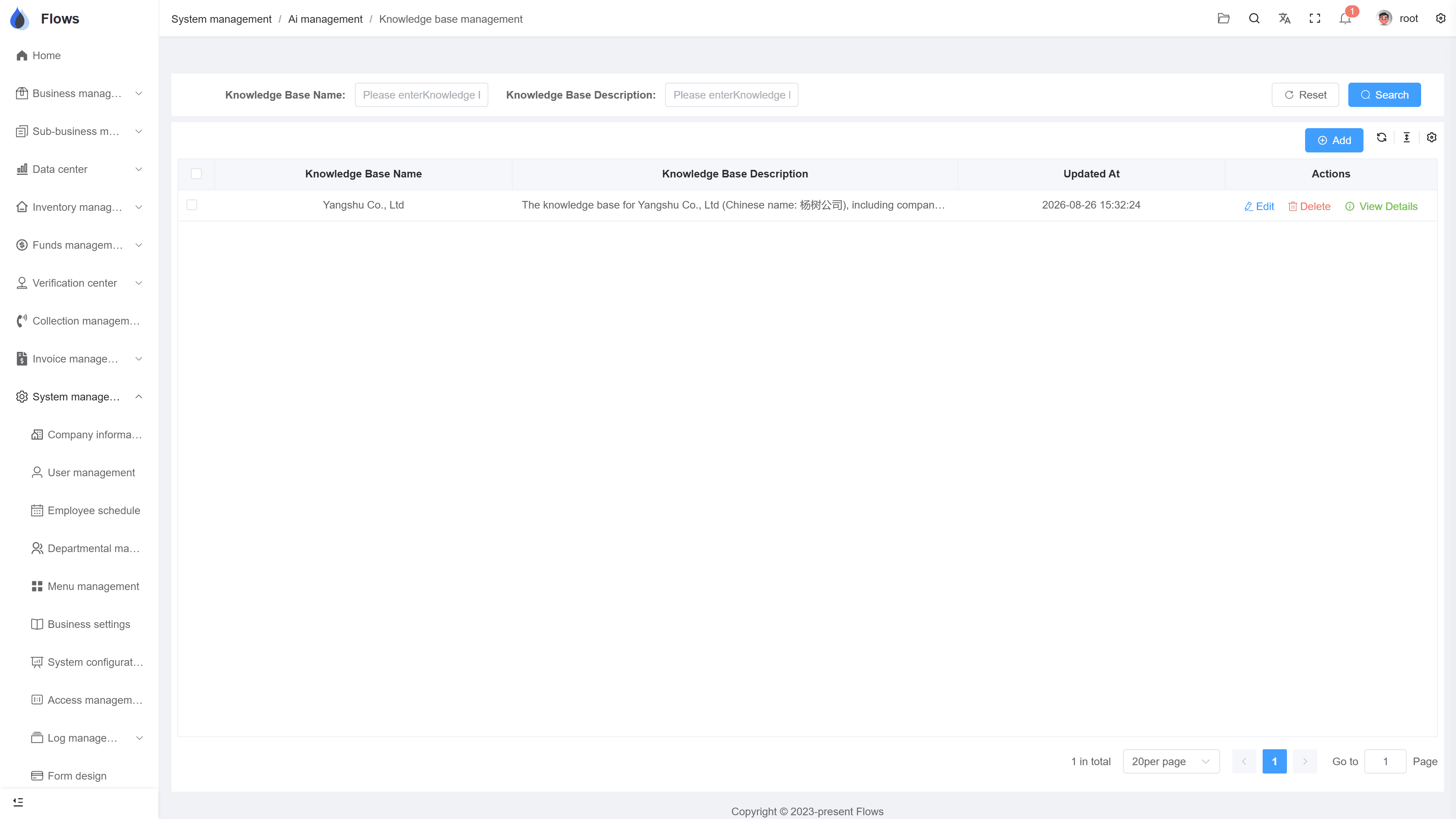
Create a finance knowledge base, a sales one, one for onboarding new staff — as many as your company's knowledge deserves. Fill each from the Word documents you already have, or write entries directly as text. Knowledge that lived in folders starts living somewhere findable.
- As many bases as you need
- Word uploads & text entries
- Organized by team or topic
- Findable, not folder-buried
Knowledge bases
Finance knowledge base
42 entries
Finance dept onlySales knowledge base
28 entries
Role: sales staffFinance AI assistant — your custom prompt
Answers from this KB only · can't see your ERP business data
02
Visibility scoped to department, role, or account
Each base is visible only to the scope you set: a department, one or more roles, or specific named accounts. The credit policy stays with finance; the sales playbook stays with sales; the general onboarding base can be open to everyone.
- Per-base visibility
- Department / role / account
- Sensitive bases stay sensitive
- Open bases where it helps
Customer — Bangkok Trading
@Somchai customer visit set for Thursday
Visible to the sales team only · full edit history
03
Assistants with your prompts — and an honest boundary
Write each assistant's system prompt yourself: a strict, policy-quoting finance assistant; a practical one for new sales staff. Each answers from its base's knowledge — and deliberately cannot see the contracts, customers, or financial figures in your ERP.
- Custom system prompt per assistant
- Different assistants per role
- Answers from the base's knowledge
- Cannot query ERP business data
Platform — system settings
API · data received from an external system
Button-level permissions on every action · fully logged
Inside the module
Real screens from Flows ERP — what your team will actually work in.
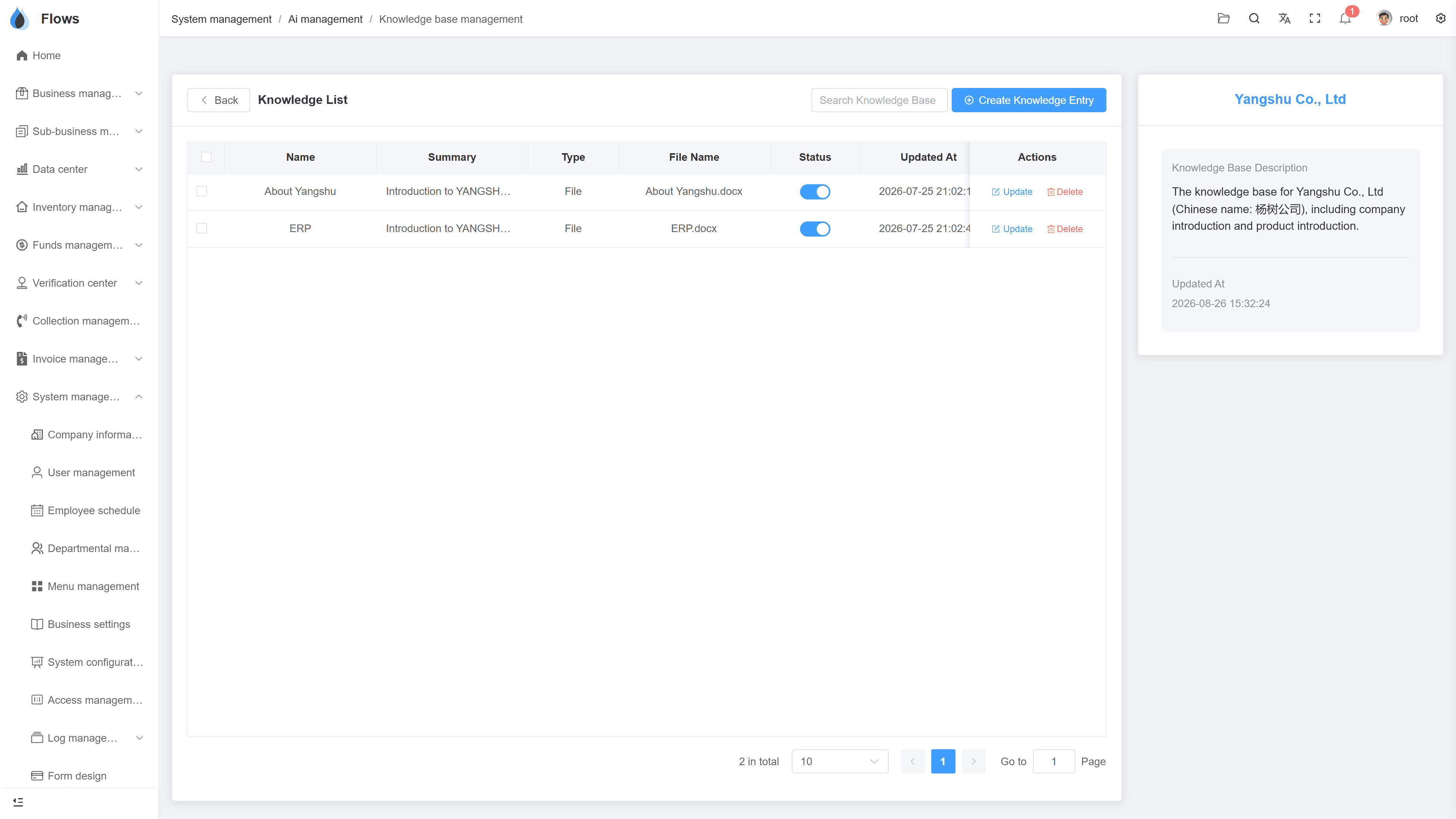
A team's knowledge base
Entries, the visibility scope, and the assistant attached — one team's knowledge in one place.
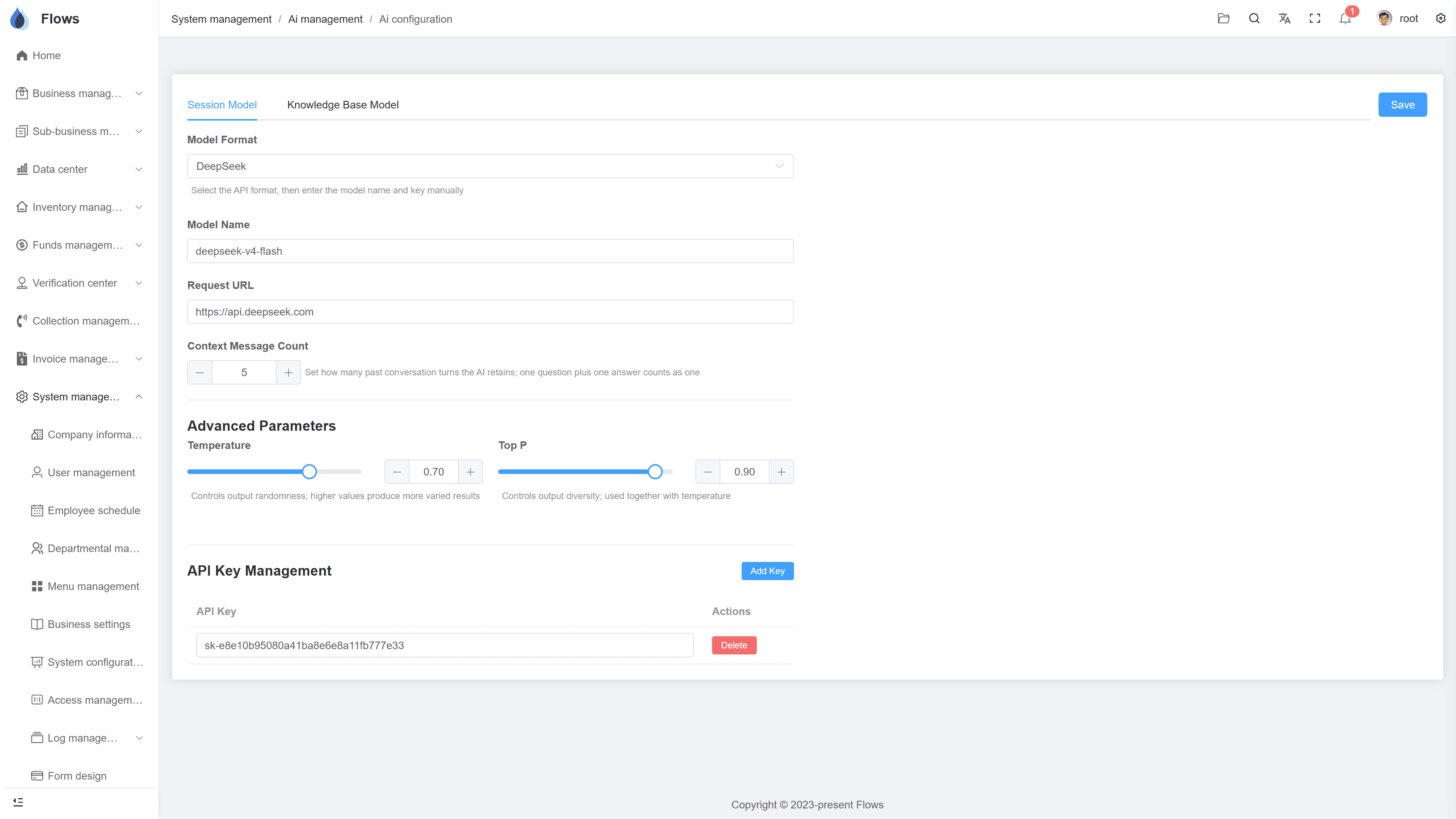
Shaping an assistant
The system prompt that defines the assistant's role, tone, and boundaries — written by you.
Why Flows
What makes Flows different
Not another generic ERP — a system built around how Thai SMEs actually buy, sell, and collect.
See how onboarding works →Priced per company, not per seat
One annual price, every module included. Add users freely within your tier — no feature gates, no seat fees.
Three languages with auto-translation
Thai, English & Chinese UI — and the data your team enters is translated automatically, so everyone reads the same records.
Your documents, exactly your format
Send us your invoice and receipt templates; our team configures them into Flows. Every document comes out looking like yours.
We walk you live — and stay
Five-step onboarding at no extra cost, then quarterly system stability reports. We don't disappear after go-live.
Spec sheet
What the AI knowledge base ships with — included in every plan.
Bases
Unlimited — per team or topic
Entries
Word file uploads and direct text
Visibility
Per base: department, roles, or named accounts
Assistants
Custom system prompt per assistant
Grounding
Assistants answer from their base's knowledge
Boundary
No access to ERP business data — by design
Continuity
Knowledge survives staff departures
Access
Governed by the same permission layer as the ERP
Frequently asked questions
What is knowledge management, and what does Flows' knowledge base do?
Knowledge management (KM) is capturing what an organization knows so it isn't trapped in individual heads and inboxes. Flows' module lets you create knowledge bases per team, fill them from Word files or text, control who sees each base, and put a custom AI assistant on top.
Can the AI assistant see our ERP business data?
No — and that's deliberate. The assistant works from the knowledge entries in its base, not from your contracts, customers, or financial records. Your business data stays inside the ERP's permission system, untouched by the AI.
How do we control who sees which knowledge base?
Per base, three ways: limit it to a department, to one or more roles, or to specific named accounts. A base for management stays with management; the general onboarding base can be open to everyone.
What does a custom system prompt let us do?
It defines how the assistant behaves: its tone, its scope, what it should refuse. Companies write different prompts for different roles — a precise, policy-quoting assistant for finance; a practical one for new sales staff — each grounded in its own base's knowledge.
How do we get knowledge in — do we have to retype everything?
No. Upload existing Word documents as entries, or paste and write text directly. Most teams start with the documents they already send new hires, then grow the base as questions come in.
Can one company have several knowledge bases?
Yes — as many as you need: finance, sales, operations, onboarding. Each base has its own entries, its own visibility scope, and can have its own assistant.
Give your company's knowledge a home.
Start a free one-month trial, or book a demo and bring one policy document — we'll build the first base together.