Features · Inventory
Transfers, returns & adjustments — the corrections real stock needs
Real warehouses aren't tidy: goods move between provinces, customers send things back, a box arrives crushed. Flows gives each of those events a proper record with a reason — so the stock number survives contact with reality.
01
Transfers — stock rebalanced, both sides recorded
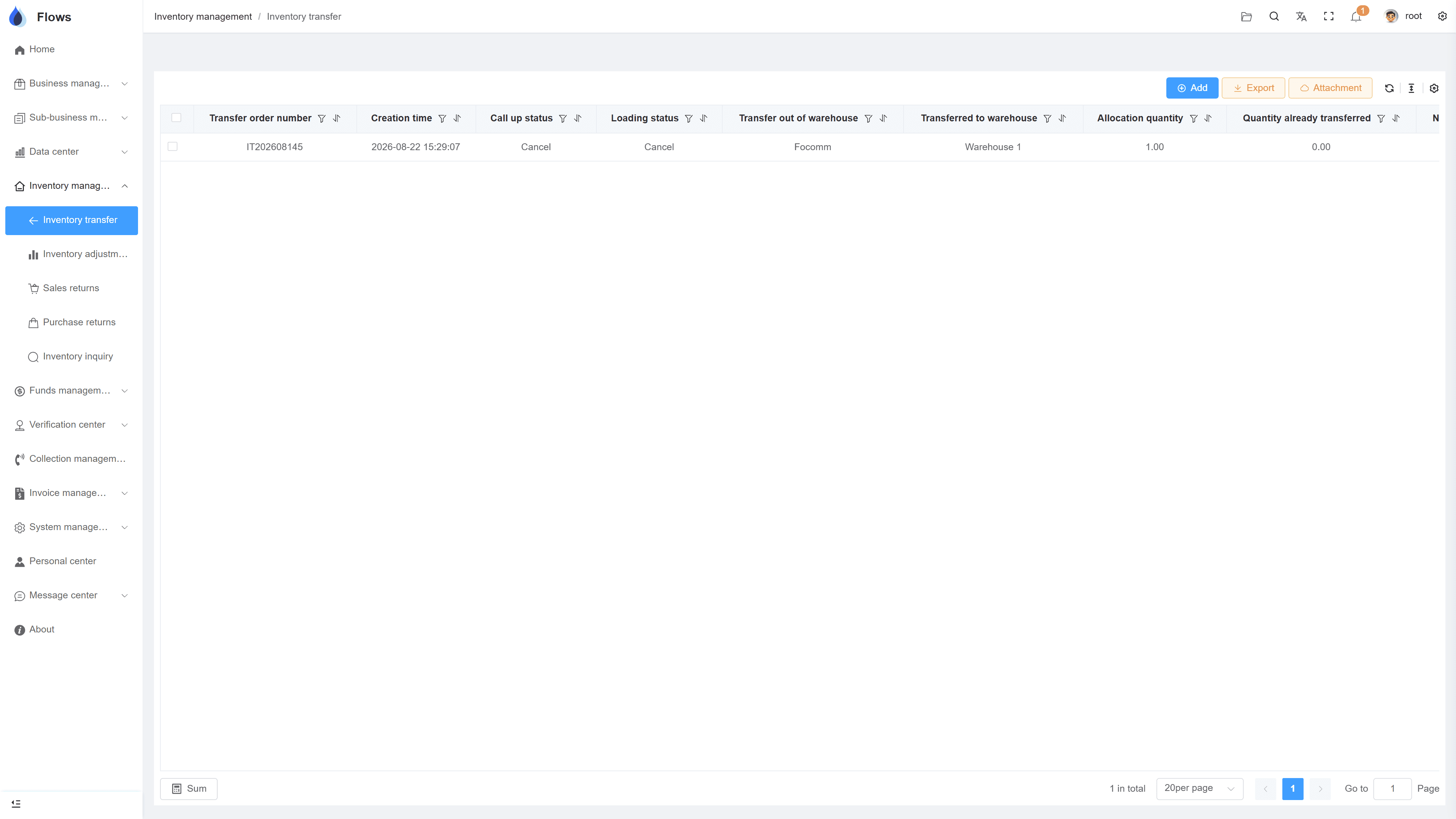
Move goods from Chiang Mai to Bangkok and the transfer writes both halves: out of one warehouse, into the other. No moment where 120 units exist twice or nowhere, and the stock cards on both sides carry the line.
- Between any two warehouses
- Out and in recorded together
- On both stock cards
- No double-counted limbo
Stock by warehouse
Bangkok WH
248 units
Chiang Mai WH
96 units
Rayong WH
512 units
02
Returns in both directions
A customer rejects goods — the sales return brings them back into the warehouse against the original contract. Your QC rejects a supplier's delivery — the purchase return sends it back out. Both carry their reason and their paper trail.
- Sales returns re-enter stock
- Purchase returns go back out
- Linked to the original contract
- Reasons on record
Receipts & delivery notes
Issued on payment write-off
Numbers always match the contract · no re-typing
03
Adjustments and alerts — honesty plus warning
Damage, loss, a count that found reality different from the ledger — record the adjustment with its reason and the balance tells the truth again. Low-stock alerts per product then guard the corrected numbers, flagging before a shortage blocks a sale.
- Damage & loss with reasons
- Count corrections
- Audit trail on every change
- Low-stock alerts per product
Stock card — Cable CB-40 · Bangkok WH
Every movement traces to its source document
In, out, balance per item · exports to Excel
Inside the module
Real screens from Flows ERP — what your team will actually work in.
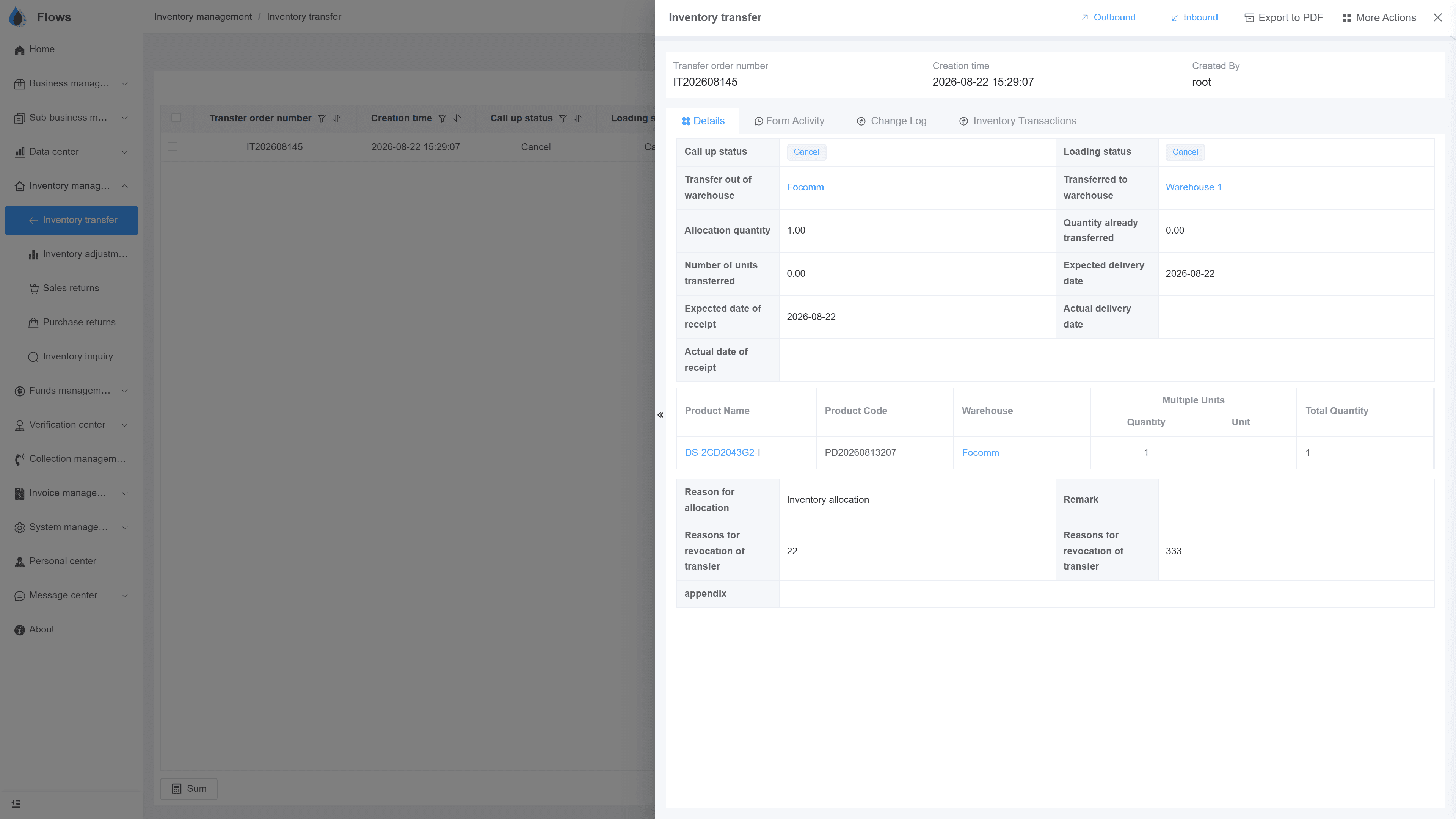
A transfer between warehouses
The goods, the source, the destination — one record moving stock without losing it.
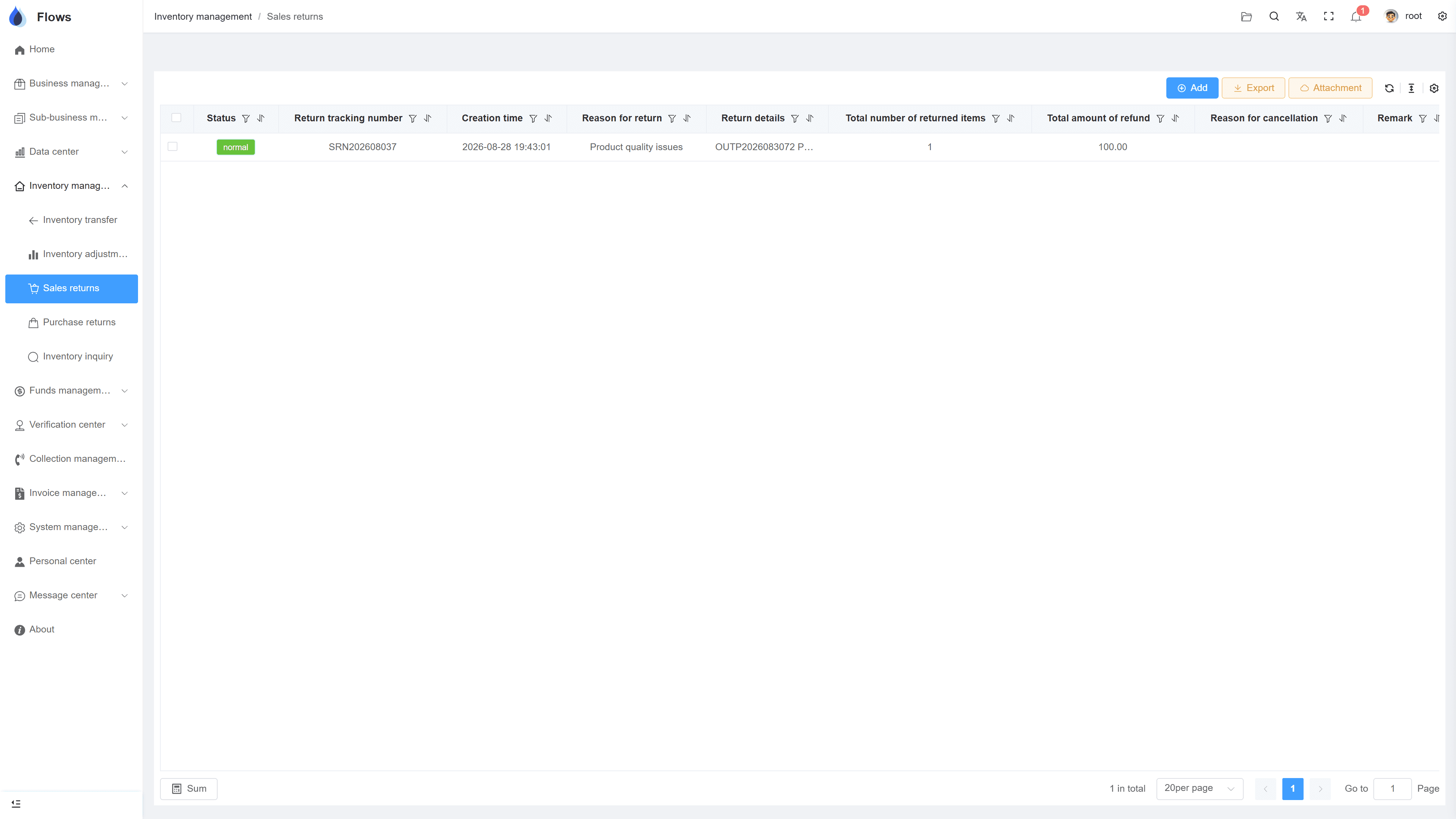
Recording a sales return
The returned items re-entering the warehouse against their contract, reason attached.
Why Flows
What makes Flows different
Not another generic ERP — a system built around how Thai SMEs actually buy, sell, and collect.
See how onboarding works →Priced per company, not per seat
One annual price, every module included. Add users freely within your tier — no feature gates, no seat fees.
Three languages with auto-translation
Thai, English & Chinese UI — and the data your team enters is translated automatically, so everyone reads the same records.
Your documents, exactly your format
Send us your invoice and receipt templates; our team configures them into Flows. Every document comes out looking like yours.
We walk you live — and stay
Five-step onboarding at no extra cost, then quarterly system stability reports. We don't disappear after go-live.
Spec sheet
What transfers, returns & adjustments ship with — included in every plan.
Transfers
Between warehouses; both sides written together
Sales returns
Goods back into stock, against the contract
Purchase returns
Goods back to the supplier, with reason
Adjustments
Damage, loss, count corrections — reasons required
Alerts
Per-product low-stock minimums
Stock cards
Every event lands on the item's ledger
Permissions
Adjustment rights controlled per role
Audit
User, time, and reason on every change
Frequently asked questions
How do I transfer stock between warehouses?
Create a transfer naming the goods, quantities, source, and destination — Flows records the outbound and inbound sides together, and both warehouses' stock cards carry the movement.
How does a customer return work?
Record a sales return against the original contract: the goods re-enter the chosen warehouse, the reason is kept, and the return is visible from the contract it belongs to.
And returning goods to a supplier?
The mirror: a purchase return sends rejected goods back out of stock against the purchase contract, with the reason recorded — quality rejections being the usual case.
How do we record damaged or lost items?
As a stock adjustment with a reason — damage, loss, or count correction. The balance updates and the adjustment line stays on the item's stock card for the audit.
Can adjustments be abused to hide theft?
That's what the controls are for: adjustment rights are limited per role, every adjustment requires a reason and carries its user and time, and the stock card shows the pattern if someone tries.
How do low-stock alerts fit in?
Set a minimum per product; when corrections and sales push the balance below it, the product is flagged — so purchasing reacts to the corrected truth, early.
Let the corrections keep the numbers true.
Start a free one-month trial, or book a demo and walk through last month's messiest stock day.