Features · Inventory
Stock cards — one item's whole story, line by line
A stock card answers the question audits and arguments always come down to: for this one item, in this one warehouse — what came in, what went out, and what should be left. In Flows the card writes itself with every confirmed movement.
01
A running ledger per item, per warehouse
Date, movement type, quantity, running balance — the classic stock-card columns, kept current automatically. No clerk copying goods-receipt slips into a book at day's end; the card is a view of what already happened.
- Date, movement, qty, balance
- Per item and per warehouse
- Always current, never re-copied
- The count sheet writes itself
Stock by warehouse
Bangkok WH
248 units
Chiang Mai WH
96 units
Rayong WH
512 units
02
Every line names its source document
An inbound line cites its purchase contract, an outbound line its sales contract, a transfer its transfer record, an adjustment its reason. When a balance looks wrong, you don't investigate — you read.
- Inbound → purchase contract
- Outbound → sales contract
- Transfers & adjustments cited
- Disputes end at the ledger
Purchase contracts
Payment plan generated — 6 periods
Pay to accountKBank •••4512
Period 1 · Sep 30฿206,666
03
From card to count to Excel
Physical counts reconcile against the card, differences become adjustments with reasons, and the whole ledger exports to Excel when the accountant or auditor wants their own copy.
- Reconcile physical counts
- Adjustments with reasons
- Excel export per item or bulk
- Audit-ready by default
Sales revenue — last 6 months
Revenue · Aug
฿4.2M
+18% vs last month
Gross margin
32.4%
Overdue receivables
฿310K
-22% vs last month
Inside the module
Real screens from Flows ERP — what your team will actually work in.
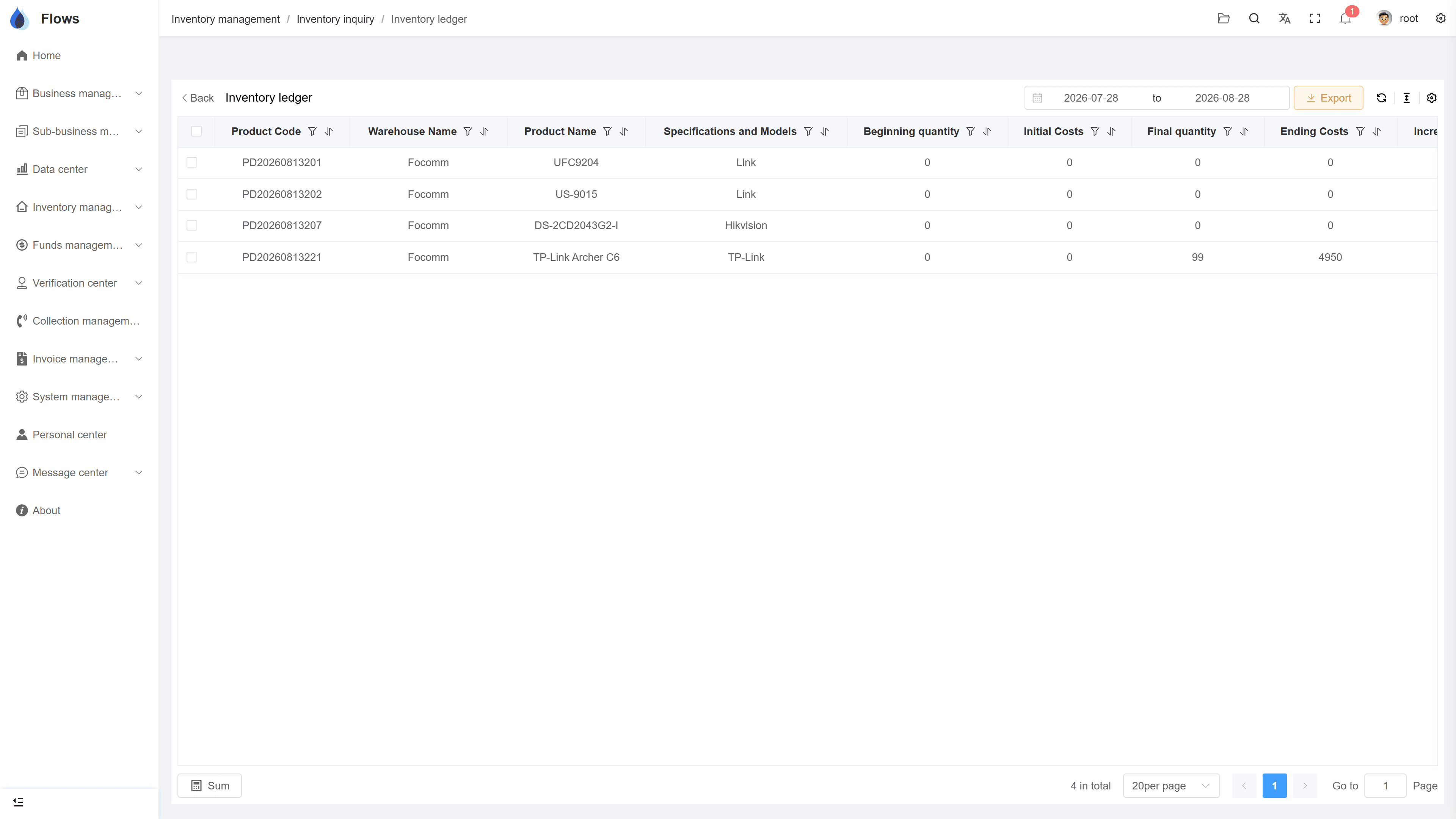
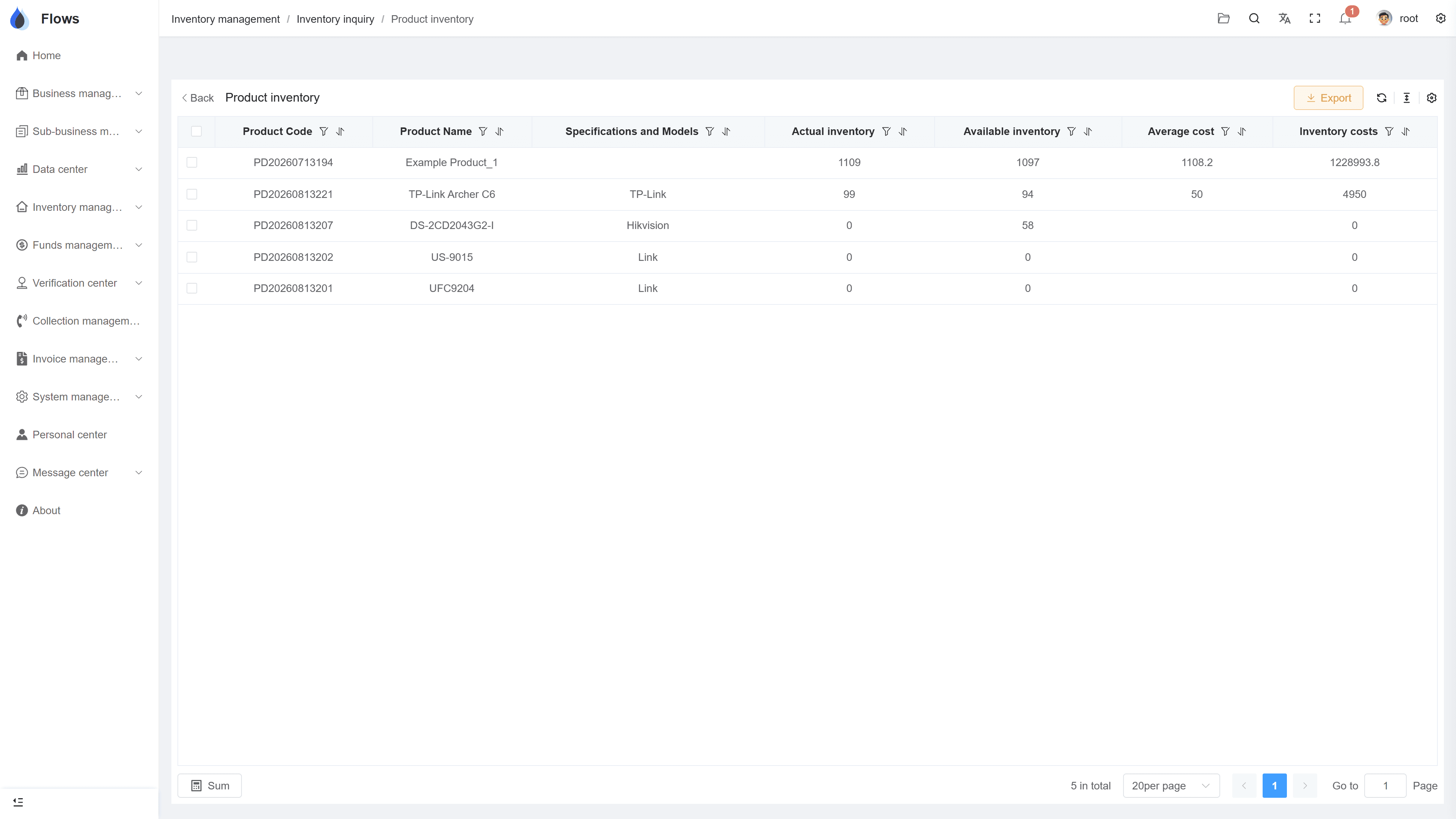
Stock card for one item
The full movement history for one product in one warehouse, with the running balance on every line.
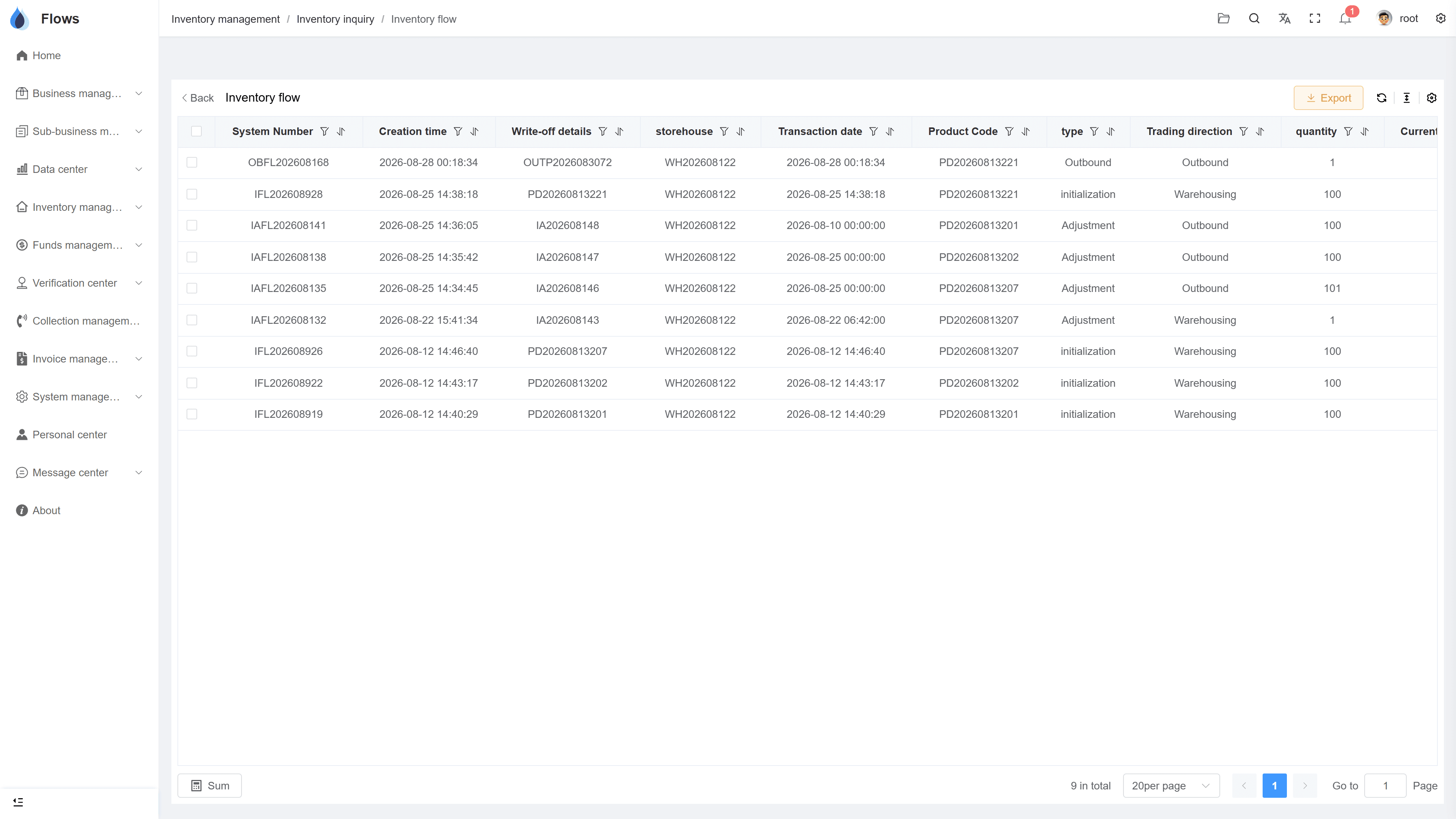
Stock flow across warehouses
The same item's balances and movements across all warehouses — where it is and where it's going.
Why Flows
What makes Flows different
Not another generic ERP — a system built around how Thai SMEs actually buy, sell, and collect.
See how onboarding works →Priced per company, not per seat
One annual price, every module included. Add users freely within your tier — no feature gates, no seat fees.
Three languages with auto-translation
Thai, English & Chinese UI — and the data your team enters is translated automatically, so everyone reads the same records.
Your documents, exactly your format
Send us your invoice and receipt templates; our team configures them into Flows. Every document comes out looking like yours.
We walk you live — and stay
Five-step onboarding at no extra cost, then quarterly system stability reports. We don't disappear after go-live.
Spec sheet
What stock cards ship with — included in every plan.
Columns
Date · movement type · quantity · running balance
Scope
Per item, per warehouse — and across warehouses
Sources
Contracts, transfers, returns, adjustments — all cited
Updates
Automatic, from confirmed movements
Counts
Physical counts reconcile via adjustments with reasons
Alerts
Low-stock minimums per product
Export
Excel export, per item or in bulk
Audit
Every movement carries its user and timestamp
Frequently asked questions
What is a stock card?
A per-item ledger showing every movement — date, type, quantity — and the running balance after each line. It's the document stores traditionally kept on paper at the shelf; Flows keeps it automatically from confirmed movements.
How is a system stock card better than a paper or Excel one?
It can't fall behind. Paper and Excel cards are only as current as the last person who wrote a line; the Flows card is a view of movements that already happened in the system, each citing its source document.
Does each warehouse have its own card?
Yes — the card is per item per warehouse, and there's a cross-warehouse view when you want the item's total picture including transfers between locations.
How do physical counts work against the card?
Count the shelf, compare with the card's balance, and record any difference as an adjustment with its reason — count correction, damage, loss. The adjustment becomes a cited line like any other movement.
Can we export a stock card to Excel?
Yes — per item or in bulk. Accountants and auditors usually take the export at period end; the card in the system stays the live source.
Where do the numbers come from originally?
From confirmed operations: inbound against purchase contracts, outbound against sales contracts, transfers, returns, and adjustments. Nothing edits a balance directly — that's what makes the card trustworthy.
Retire the paper stock card.
Start a free one-month trial, or book a demo and trace one of your own products end to end.