Features · Finance
Cash management — every account, one honest number
Cash questions shouldn't need three logins and a phone call. Flows keeps all company bank accounts in one view — balances, transfers between them, daily expenses — and because contracts drive the inflows and outflows, the cash picture connects to why the money moved.
01
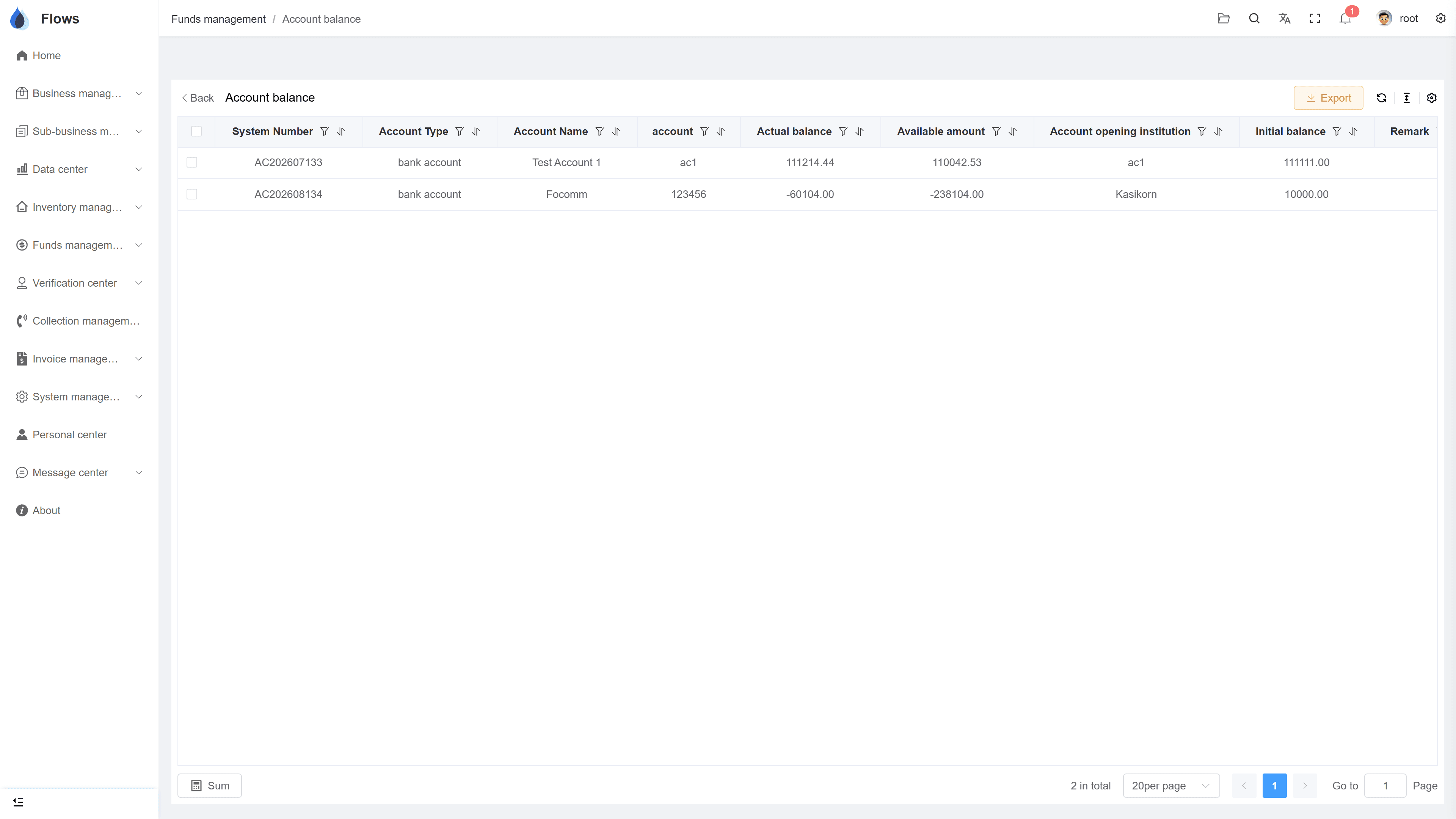
All accounts, with real opening balances
Register each company bank account with its opening balance, and Flows maintains the running balance from every payment, receipt, transfer, and expense that follows. The total across accounts is your actual cash position — not an estimate.
- Every account in one view
- Opening balances set once
- Running balances maintained
- Company-wide cash total
Contracts — money in & money out
Sales · money in
78% collected
Purchases · money out
55% paid on plan
Net cash this month
+฿204,100
02
Transfers and daily expenses, recorded where they happen
Move funds between accounts with both sides recorded. Log the office rent, utilities, and other daily expenses — and non-core income too — so the account balances in Flows track the bank statements they mirror.
- Inter-account transfers
- Daily expenses with categories
- Non-core income recorded
- Statements and system agree
AR write-off center
03
From balances to cash-flow insight
Balances and movements feed the data center's cash-flow view: inflows against outflows, actual collections against the plan, and the forecast built from upcoming contract periods. Low-cash alerts warn before a payment run would hurt.
- Cash-flow analysis view
- Plan vs. actual comparison
- Forecast from contract periods
- Low-cash alerts
Sales revenue — last 6 months
Revenue · Aug
฿4.2M
+18% vs last month
Gross margin
32.4%
Overdue receivables
฿310K
-22% vs last month
Inside the module
Real screens from Flows ERP — what your team will actually work in.
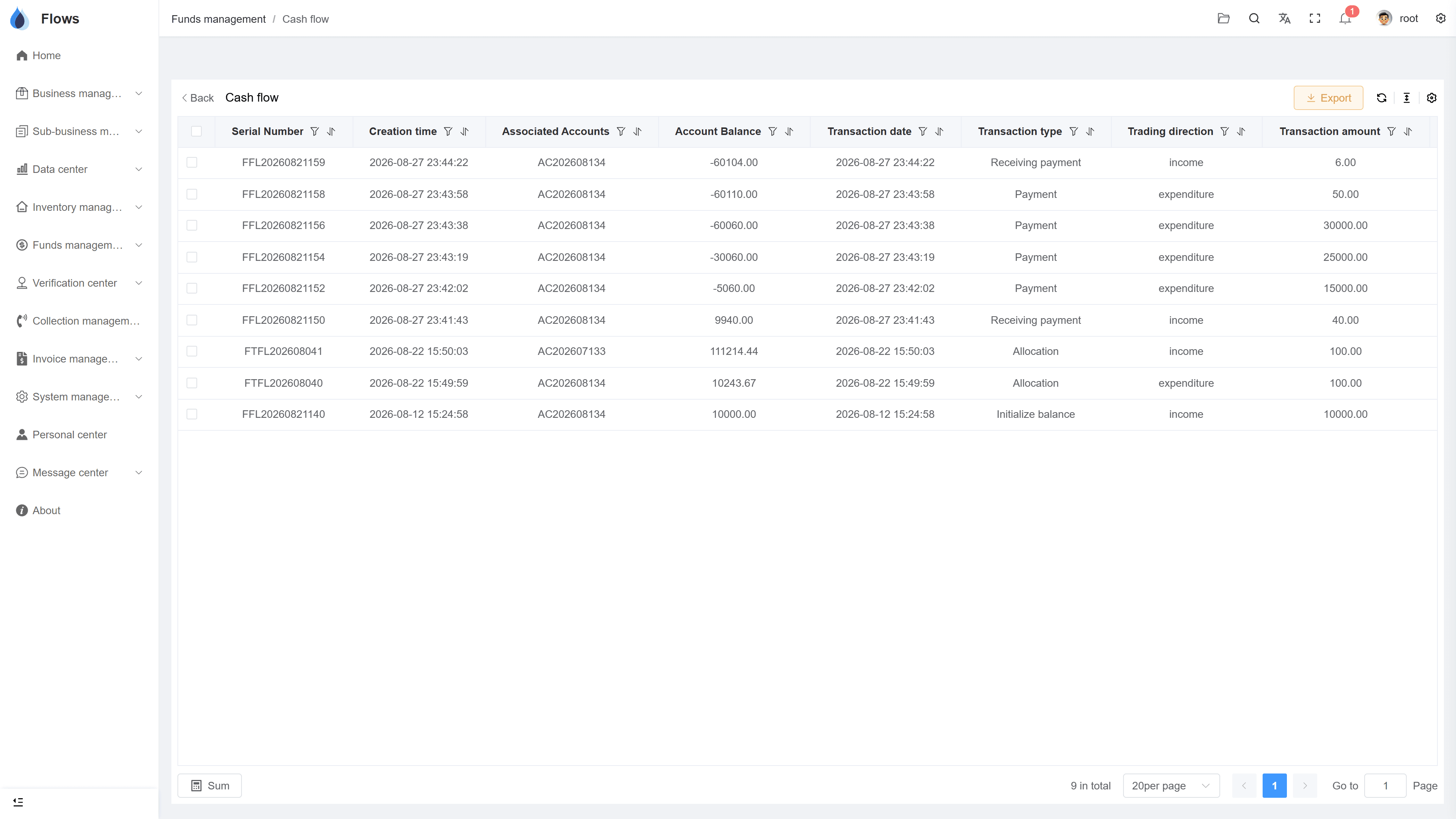
Account balances and movements
Each account's balance with its recent movements — the daily cash check without opening a bank app.
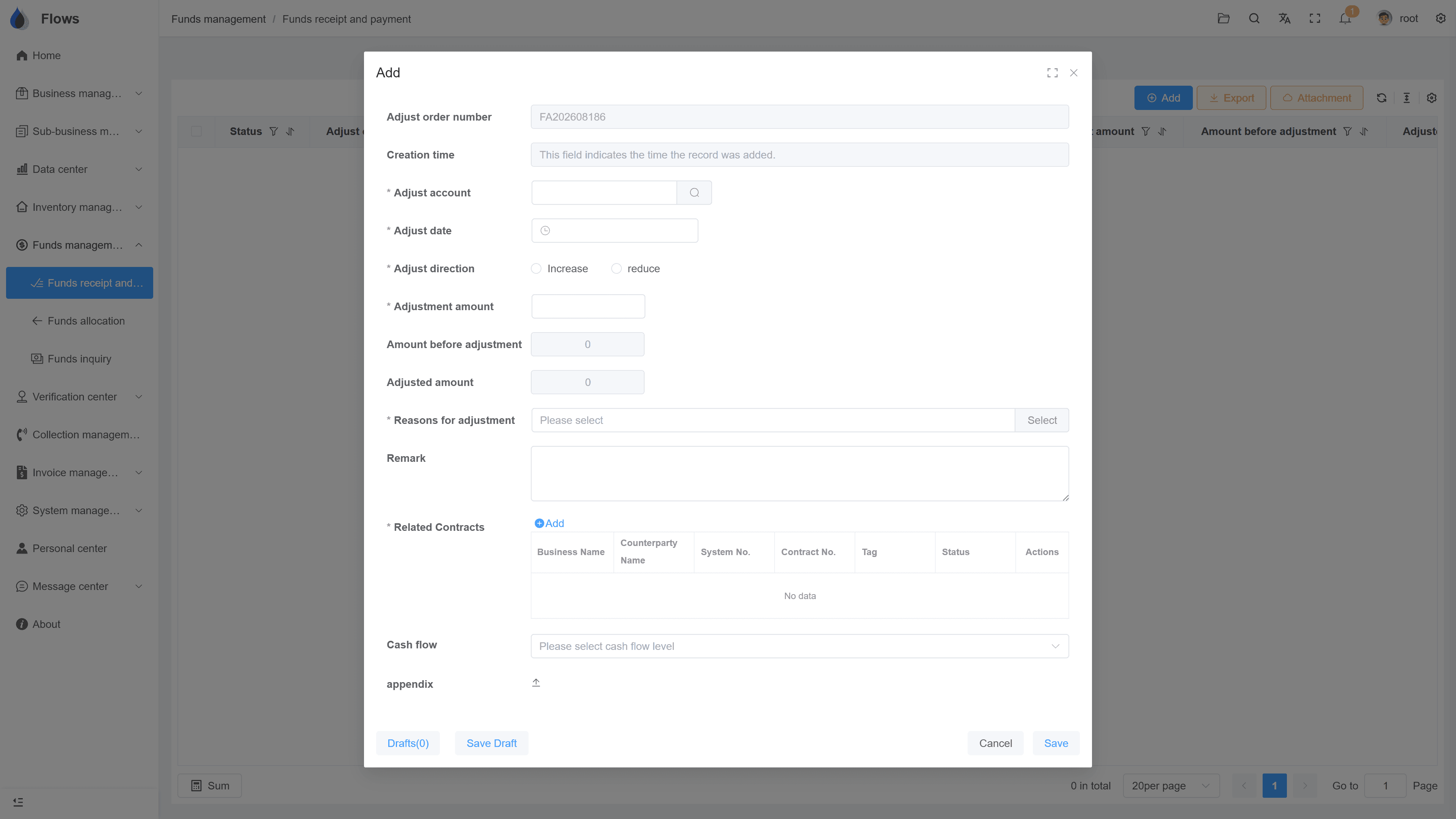
Recording an expense
Rent, utilities, supplies — logged with a category and reflected in the account balance immediately.
Why Flows
What makes Flows different
Not another generic ERP — a system built around how Thai SMEs actually buy, sell, and collect.
See how onboarding works →Priced per company, not per seat
One annual price, every module included. Add users freely within your tier — no feature gates, no seat fees.
Three languages with auto-translation
Thai, English & Chinese UI — and the data your team enters is translated automatically, so everyone reads the same records.
Your documents, exactly your format
Send us your invoice and receipt templates; our team configures them into Flows. Every document comes out looking like yours.
We walk you live — and stay
Five-step onboarding at no extra cost, then quarterly system stability reports. We don't disappear after go-live.
Spec sheet
What cash management ships with — included in every plan.
Accounts
All company bank accounts, with opening balances
Balances
Running balances from payments, receipts, transfers, expenses
Transfers
Between accounts, both sides recorded
Adjustments
Daily expenses & non-core income with reasons
Alerts
Low-cash warnings at your thresholds
Analysis
Cash-flow view in the data center, plan vs. actual
Audit
Every movement logged with user and time
Export
Balances and movements exportable to Excel
Frequently asked questions
What is cash flow, and how does Flows track it?
Cash flow is the movement of money in and out of the business over a period. Flows tracks it from the events themselves — write-offs bringing money in, supplier payments and expenses taking it out, transfers moving it around — so the picture updates as the business runs.
What's the difference between cash flow and profit?
Profit counts what you earned; cash flow counts what actually moved. A profitable month can still leave you unable to pay salaries if customers haven't paid yet — which is why Flows pairs the cash view with receivables and their due dates.
Can we record daily expenses like rent and utilities?
Yes — cash adjustments record office rent, utilities, supplies, and similar daily outflows with categories, and non-core income the same way. They keep the account balances honest between contract-driven movements.
How do low-cash alerts work?
Set a threshold; when an account's balance falls below it, Flows flags it — early enough to move funds or delay a payment run deliberately instead of discovering the problem at the bank.
Does Flows produce a cash-flow statement (งบกระแสเงินสด)?
The data center's cash-flow view shows balances, inflows and outflows, plan-versus-actual, and a forecast from upcoming contract periods — the management view of the same information an accountant formalizes into the statutory statement.
How do opening balances work when we start?
Enter each account's balance as of your go-live date during onboarding. From that point the system maintains the running balance — most teams verify it against the bank statement during the parallel-run period.
Know your cash position before lunch.
Start a free one-month trial, or book a demo and set up your accounts to see the live picture.